Your Strategic Partner in Franchise System Development.
Learn how to Franchise a Business Profitably.
Call us at: 1-800-471-1682Learn how to Franchise a Business Profitably.

Summary:
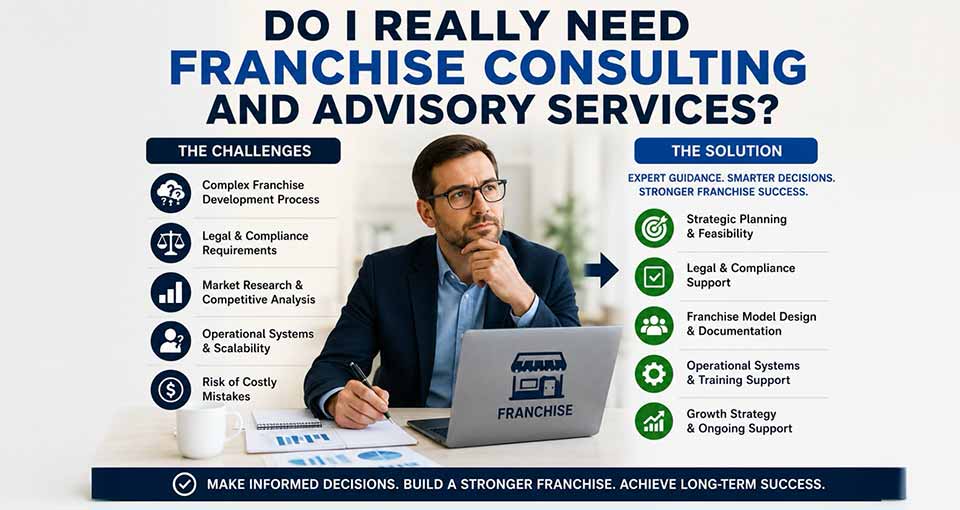
Thinking about franchising your business solo? Most entrepreneurs don't realize that DIY development can cost $60,000-$100,000 more than hiring professionals—and that's before the legal penalties hit. Here's what actually determines whether you need expert help.
Key Takeaways
The franchising industry represents one of the most proven business expansion models, yet many entrepreneurs wrestle with a critical decision: invest in professional franchise consulting or attempt the complex development process alone. This choice often determines the difference between a profitable launch and costly mistakes that can cripple a business before it begins.
The financial reality of franchising becomes clear when comparing professional development costs against the hidden expenses of going solo. Professional franchise consulting typically ranges from $30,000 to $50,000 for complete development services, though some consultants may charge between $5,000 to $250,000 depending on scope and complexity.
Experienced franchise consultants bring decades of industry knowledge that prevents expensive missteps during the development process. Franchise Growth Partners offers legal document preparation at pre-negotiated rates alongside their consulting services, helping establish proper foundations for franchise development.
The cost differential becomes even more pronounced when considering opportunity costs. While DIY development often extends timelines by 6-12 months for recruiting the first franchisee, professional consulting streamlines the process, allowing franchisors to begin generating revenue sooner and recoup their investment faster.
Franchise law represents one of the most complex regulatory environments in business, with strict federal and state requirements that carry severe penalties for non-compliance. The Federal Trade Commission's Franchise Rule mandates specific disclosure requirements that must be precisely followed, while individual states add their own layers of registration and filing requirements.
The Franchise Disclosure Document serves as the cornerstone of legal compliance, requiring detailed financial projections, operational procedures, and risk disclosures. Legal fees for FDD development alone range from $10,000 to $45,000, but inadequate preparation often forces multiple revisions that double or triple these costs.
Professional franchise consultants work alongside experienced franchise attorneys to ensure FDD accuracy from the start. This collaboration prevents the common scenario where inadequately prepared documents require extensive rewrites, additional legal fees, and delayed launch timelines that cost thousands in lost revenue.
Violations of the FTC Franchise Rule carry penalties that can devastate emerging franchise systems. These violations include failing to provide the FDD within required timeframes, making unauthorized earnings claims, or inadequate disclosure of material facts. Penalties range from cease and desist orders to significant financial settlements that can exceed $100,000.
Beyond financial penalties, FTC violations damage franchisor credibility and make future franchisee recruitment extremely difficult. Professional consulting ensures compliance from day one, protecting both the franchisor's reputation and financial stability while establishing proper procedures for ongoing regulatory adherence.
Successful franchise systems require development across five core training areas that form the foundation for consistent brand delivery, franchisee success, and sustainable growth across all locations. These areas represent the training certification programs that prepare franchisors for effective system management.
1. Marketing and Lead Generation Framework
Effective franchise marketing requires both brand-level advertising strategies and local market lead generation systems. This framework includes digital marketing protocols, traditional advertising guidelines, and lead qualification processes that ensure consistent brand messaging while allowing for local market adaptation.
The marketing system must also establish clear roles between franchisor and franchisee responsibilities, including advertising fee structures, approved vendor relationships, and performance measurement standards that drive accountability and results.
2. Franchise Sales Training Process
Franchise sales differ significantly from traditional business sales, requiring specialized training in relationship building, qualification procedures, and disclosure processes. This system includes prospect identification methods, presentation standards, and follow-up protocols that maximize conversion rates while maintaining legal compliance.
Professional sales training also covers objection handling specific to franchise sales, financing assistance programs, and territory development strategies that support sustainable growth and franchisee success from the start.
3. Operations Management Systems
Operations management ensures consistent service delivery across all franchise locations through standardized procedures, quality control measures, and performance monitoring systems. This framework includes detailed operational manuals, training protocols, and ongoing support structures.
Modern operations systems often incorporate cloud-based management platforms that provide real-time reporting, inventory management, and communication tools that keep franchisees connected to corporate support while maintaining operational independence.
4. Financial Management Controls
Robust financial management systems protect both franchisor and franchisee interests through standardized accounting procedures, reporting requirements, and performance benchmarking. These controls include cash flow management tools, profit margin analysis, and budget planning resources that support long-term financial success.
Effective financial systems also establish clear fee collection procedures, royalty reporting standards, and audit protocols that ensure transparency and compliance while providing valuable business intelligence for system-wide improvements.
5. Leadership Development Structure
Strong franchise systems require ongoing leadership development that prepares franchisees for business challenges while maintaining brand standards. This structure includes initial management training, ongoing education programs, and mentorship opportunities that build confidence and competence.
Leadership development also includes succession planning support, multi-unit development training, and peer networking programs that create a supportive community of successful franchise owners who contribute to overall system strength.
The difference between strategic franchise development and improvised approaches becomes evident in long-term success rates and profitability metrics. Strategic planning addresses market analysis, competitive positioning, and growth projections that guide decision-making throughout the development process.
DIY franchise development often fails to achieve profitability due to inadequate market research, unrealistic financial projections, and insufficient operational planning. Without professional guidance, entrepreneurs frequently underestimate development costs, overestimate revenue projections, and fail to establish sustainable business models.
Common DIY failures include inadequate franchisee screening procedures, insufficient training programs, and weak ongoing support systems that result in high franchisee turnover and damaged brand reputation. These failures compound over time, making recovery increasingly difficult and expensive.
Successful franchise development follows a three-tier planning approach that addresses strategic, tactical, and operational considerations. The strategic tier focuses on market positioning, competitive analysis, and long-term growth objectives that guide overall system development.
The tactical tier translates strategic objectives into specific business operations, including marketing programs, training curricula, and support services that deliver consistent results. The operational tier establishes day-to-day procedures, quality standards, and performance metrics that ensure sustainable execution of strategic and tactical plans.
The true cost of DIY franchise development extends far beyond initial legal and registration fees, including hidden expenses that often surprise unprepared entrepreneurs. These costs accumulate through extended development timelines, operational mistakes, and missed opportunities that professional guidance prevents.
Legal and compliance costs for franchise development typically range from $50,000-$150,000, though some sources indicate lower ranges of $26,000-$38,000 for basic legal foundations. The wide variation depends on complexity, state requirements, and the level of professional support involved.
DIY approaches often result in higher total costs due to legal revisions, compliance failures, and extended timelines. Professional guidance helps control these costs while ensuring quality outcomes that support long-term success and growth.
Inadequate operational planning creates systemic weaknesses that undermine franchisee success and damage overall brand performance. Common mistakes include insufficient training programs, weak ongoing support systems, and unclear operational standards that leave franchisees struggling to achieve profitability.
These operational failures often compound through poor franchisee selection, inadequate territory planning, and insufficient marketing support that results in high turnover rates and negative brand perception. Recovery from these mistakes requires significant investment and time that professional planning prevents.
Professional franchise consulting streamlines development timelines through efficient project management, established vendor relationships, and streamlined approval processes. This accelerated approach allows franchisors to begin generating revenue sooner while capitalizing on market opportunities.
DIY development typically takes 6-12 months longer to recruit the first franchisee due to learning curves, regulatory delays, and revision cycles that consume valuable time and resources. Extended timelines also increase opportunity costs as market conditions change and competitive advantages diminish during prolonged development periods.
The circumstances where DIY franchise development makes financial sense are extremely limited and typically apply only to established businesses with extensive legal and operational expertise already in place. Even then, the complexity of franchise regulation and the importance of proper foundation work usually justify professional consultation.
Entrepreneurs with backgrounds in franchise law, extensive business development experience, and substantial financial reserves might consider hybrid approaches that combine professional legal counsel with internal development efforts. However, the risks associated with incomplete or inadequate development typically outweigh any potential cost savings from DIY approaches.
Professional franchise consulting provides structured development processes that include FDD development, franchise agreements, regulatory compliance, and operational frameworks. This investment establishes the infrastructure needed for legal franchise operations while positioning the system for sustainable growth.
Complete franchise launch costs extend beyond the legal foundation to include marketing development, training program creation, operational system implementation, and ongoing support infrastructure. However, the foundational investment in professional guidance ensures these additional investments build upon solid legal and operational frameworks that support long-term success.
The value proposition becomes clear when comparing the structured support and risk mitigation provided by professional consulting against the potential costs and consequences of inadequate development efforts that can destroy franchise systems before they achieve profitability.
For entrepreneurs considering franchise development, Franchise Growth Partners offers consulting and advisory services that provide the expertise and support needed to successfully launch and grow franchise systems.