Your Strategic Partner in Franchise System Development.
Learn how to Franchise a Business Profitably.
Call us at: 1-800-471-1682Learn how to Franchise a Business Profitably.

Summary:
Thinking about franchising your business? Most new franchisors fail before they ever open their second location—and it's rarely because of a bad business model. The real issue? They skip the one step that separates systems that scale from those that stall.
Key Takeaways
Starting a franchise business is one of the most exciting — and complex — entrepreneurial paths anyone can take. The upside is real: proven business models, scalable growth, and the ability to build something that outlasts any single location. But the path from "I want to franchise my business" to a fully operational, legally compliant, and actively growing franchise system is filled with technical, legal, and operational landmines that trip up even experienced business owners. What separates the franchisors who make it from those who don't often comes down to one thing: expert guidance from the very beginning.
Most business owners who decide to franchise their concept already have something that works. They've built a product, a service, a customer experience worth replicating. The problem isn't the business — it's the assumption that what works in one location will automatically translate into a scalable franchise system without a deliberate, structured plan.
It won't. Not without a roadmap.
When a new franchisor steps into the process without a clearly defined strategy, they're essentially building a plane while flying it. Decisions get made reactively. Legal documents get drafted before the operational model is fully thought through. Sales start before training systems are in place. Each of these missteps compound into wasted capital, inconsistent franchisee experiences, and a brand reputation that becomes harder to rebuild than it was to establish.
The franchising process demands that strategic, tactical, legal, and financial planning all happen in coordination — not sequentially, not in isolation. That's the core value franchise consulting services bring to the table. Expert consultants help new franchisors avoid expensive errors and optimize their franchise program through insights drawn from real-world ownership and expansion experience, compressing what might otherwise be years of trial-and-error into a structured, accelerated process.
There's a common misconception that franchise consultants are simply advisors who point new franchisors in the right direction and step aside. The reality is far more hands-on — and far more valuable.
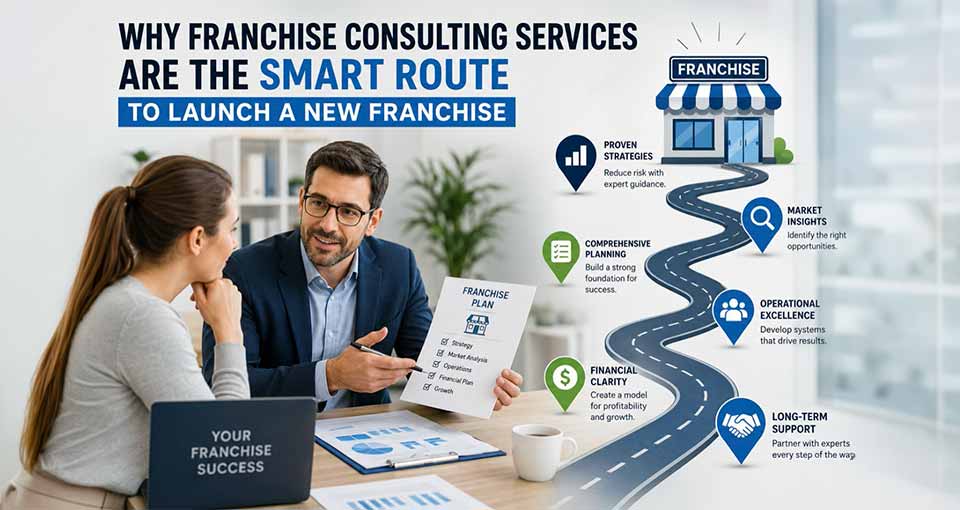
A qualified franchise consultant works across three critical planning layers simultaneously. The strategic plan defines the long-term vision: regional, national, or international expansion targets, brand positioning, and franchise model structure. The tactical operations plan maps out the day-to-day mechanics — how franchisees will be trained, supported, and held accountable. The financial plan calculates the true initial and ongoing costs of marketing, selling, and running a profitable franchise system.
These three layers aren't independent. They're deeply interdependent. A financial plan without a tactical foundation will misrepresent operational costs. A tactical plan without a strategic anchor will lack scalability. And an FDD drafted before any of these are finalized? That document will be deficient before the ink dries — creating legal and operational exposure that's expensive to unwind.
This is exactly the kind of integrated, front-loaded planning that Franchise Growth Partners was built around — a consulting model designed to ensure new franchisors have the right foundation in place before any legal documents are drafted or franchise sales begin.
There's another dimension that often gets overlooked: objectivity. When a franchisor tries to build their system without outside counsel, every decision is filtered through their own assumptions and blind spots. The things you don't know you don't know are usually the most dangerous ones.
Franchise consultants bring an outside perspective that's both informed and impartial. Unlike internal development staff who are naturally focused on a single brand's interests, independent franchise consultants are oriented toward what actually works — drawing on experience across multiple industries, system sizes, and growth stages. That objectivity isn't just reassuring; it's strategically valuable when the stakes are high and the decisions are irreversible.
The Franchise Disclosure Document is the legal backbone of every franchise system in the United States. Getting it right isn't optional — it's the law.
Under the Federal Trade Commission's Franchise Rule, franchisors are legally required to provide every prospective franchisee with a complete and compliant FDD before any sale is made. The document covers 23 specific disclosure items, including fees, obligations, litigation history, financial performance, and the franchise agreement itself.
A well-prepared FDD does more than satisfy a legal checkbox. It protects the franchisor from future disputes, establishes clear expectations for franchisees, and signals to the market that this is a credible, professionally structured system. Errors — whether omissions, misstatements, or structural deficiencies — can trigger regulatory action, expose the franchisor to litigation, and, in some cases, void franchise agreements entirely. Fixing a poorly drafted FDD after the fact is significantly more expensive than doing it right the first time.
This is why sequence matters so much: strategic and operational planning must precede legal documentation, not follow it. An FDD drafted on a weak operational foundation will reflect that weakness in ways that are difficult and costly to correct.
One of the more practical concerns for new franchisors is legal cost unpredictability. Franchise attorneys typically bill by the hour, and the complexity of FDD preparation, franchise agreements, and area development agreements can drive legal fees well beyond initial estimates — especially when revisions are needed because the strategic groundwork wasn't done first.
A fixed-rate approach to legal document preparation changes that dynamic entirely. When consulting firms partner with experienced franchise attorneys to offer pre-negotiated flat rates for FDD drafting, franchise agreements, and area development agreements, franchisors gain cost certainty at one of the most sensitive financial stages of their launch. It's a structural advantage that makes budgeting realistic and eliminates one of the more anxiety-inducing variables in the process.
The franchise system is only as strong as the people running it — on both sides of the agreement. New franchisors need to become proficient not just in their own product or service, but in how to market a franchise opportunity, sell it, operate it, manage its finances, and lead it at scale. That's a broad set of skills, and most business owners enter the process strong in one or two areas and underprepared in the rest.
Structured training programs, delivered at the right stage of development, close those gaps systematically. Here's what a complete training curriculum for an emerging franchisor looks like in practice:
1. Marketing and Lead Generation
Franchise growth starts with a consistent pipeline of qualified franchisee candidates. Marketing and lead generation training equips franchisors with the strategies to build brand awareness, drive inbound inquiries, and position their opportunity in a competitive market. This includes digital marketing fundamentals, franchise portal strategy, and how to build a sustainable lead funnel that supports long-term expansion goals — not just the first few sales.
2. Franchise Sales Training
Selling a franchise is fundamentally different from selling a product or service. The FTC's disclosure requirements, the relationship-driven nature of franchise development, and the high stakes of selecting the right franchisee make this a discipline that requires specific training. Franchise sales training covers the discovery process, candidate qualification, how to present the FDD compliantly, and how to close sales without applying improper pressure — all while protecting both parties legally.
3. Franchise Operations Management
Operational consistency is the foundation of brand integrity across a franchise network. Operations management training covers how to build and enforce standards, support franchisees through their launch and ongoing operations, manage performance, and handle underperformance constructively. A franchisor who can't operationally support their franchisees will struggle to grow beyond their first cohort of locations.
4. Financial Management Training
Understanding unit-level economics, royalty structures, marketing fund management, and system-wide financial health is non-negotiable for any franchisor who wants to build a profitable network. Financial management training gives franchisors the tools to monitor performance, identify trouble early, and make data-informed decisions about pricing, expansion timing, and reinvestment strategy.
5. CEO Leadership Development
Franchising a business means transitioning from operator to leader of an organization. That shift requires a different mindset and a different skill set. CEO leadership development training focuses on building the vision-setting, communication, decision-making, and culture-building capabilities that franchisors need to inspire franchisee confidence, attract top talent, and sustain growth through the inevitable challenges of scaling a brand.
Grow Your Brand Without Building an Entire Infrastructure
One of the most significant financial concerns for new franchisors is the cost of building out internal infrastructure to support a growing network. Office space, executive hires, operations systems, legal review, accounting — the list of operational needs that come with running a franchise company is long and building it all from scratch is expensive.
The smarter approach is to use specialized support services that scale with the business, rather than front-loading capital into fixed infrastructure before the revenue exists to justify it.
Seven Support Services That Scale with You
A well-structured franchisor support platform typically covers the key operational areas that new systems need most — available as needed, rather than as permanent overhead. The following seven service categories represent the core of what a scalable franchisor support infrastructure looks like:
Access to these services — on a standardized, cost-effective basis — means a new franchisor can present a fully professional, fully supported franchise offering without the capital burden of building each function from scratch.
Cost is one of the first questions every aspiring franchisor asks — and the answer is more variable than most expect. The cost to franchise a business typically ranges from $15,000 to $100,000, though more complex systems with aggressive expansion goals can push that figure toward $300,000. The wide range reflects significant differences in scope: how developed the business model is, how many markets are being targeted, how much legal groundwork has already been done, and whether the franchisor is building from scratch or refining an existing structure.
The more important question isn't how much will this cost — it's how much of this spend is actually necessary. Many new franchisors significantly overspend in the early stages because they're working without a plan. Legal fees balloon when documents need repeated revisions. Marketing budgets get wasted on the wrong channels. Training costs multiply when programs are built reactively rather than designed proactively.
A structured consulting engagement doesn't just add expertise — it directly reduces waste. With integrated planning, fixed-rate legal preparation, and stage-appropriate training, franchisors can build a fully compliant, operationally sound franchise system for under $50,000 in many cases. That's not a corner-cutting approach — it's what happens when the process is executed in the right order, by people who've done it before.
Numbers and frameworks are useful, but nothing makes the case for expert guidance more powerful than real outcomes. Some franchisors, working with seasoned consulting partners, have gone from operating a single location to selling hundreds of franchise units in just a few years. That kind of growth trajectory doesn't happen by accident — it's the result of strategic planning executed with precision, an operational model built to be replicated consistently, and marketing and sales programs designed specifically for franchise expansion.
What those outcomes illustrate is something easy to underestimate in the abstract: the compounding effect of getting the foundation right. Every element of the franchise system — the FDD, the training programs, the operations manual, the franchisee support infrastructure — either accelerates or limits growth depending on how well it was built. When those elements are aligned and executed correctly from the start, the system has room to scale. When they're not, every new franchisee added to the network also adds new operational strain.
The difference between stalling at five locations and scaling to hundreds often isn't the quality of the underlying business. It's the quality of the franchise system built around it.
The gap between wanting to franchise a business and actually doing it successfully is almost always a knowledge gap — not a capability gap. Most business owners who are ready to franchise already have the product, the process, and the track record. What they need is a clear, structured path forward that accounts for the legal, operational, financial, and strategic dimensions of franchise development all at once.
That path starts with a conversation. Not a sales pitch — a real, substantive consultation with someone who has built franchise systems, handled FDD compliance, scaled franchisee networks, and coached emerging franchisors through exactly the challenges that feel most overwhelming right now. The questions that feel too basic to ask, the costs that feel unclear, the steps that seem out of order — a single focused conversation with the right expert can bring all of it into focus.
The cost of getting it wrong — wasted legal fees, deficient disclosure documents, undertrained franchisees, stalled sales — is far greater than the cost of getting it right. The smartest move is to find out exactly what a well-structured franchise launch looks like before committing capital in the wrong direction.
Franchise Growth Partners offers free initial consultations for aspiring franchisors looking to build their system the right way — visit FranchiseGrowthPartners.com to take the first step toward a franchise system built to last.